
What do you know about Human Trafficking?
Written by Emily Pazel

In recent days, social media and the 24-hour news cycle has paid more attention to a horrendous act sweeping our country thats impacting children around the world. Although human trafficking has been around for a long time, recent updates, rescues and victim recovery measures have surfaced in the news and online social media platforms, and caught the attention of millions. Unfortunately, human trafficking is a very real thing thats happening right under our nose, and is every parents worst nightmare.
Keep reading


The U.S. Marshals Service announced the rescue of 39 endangered children in Georgia during the month of August, all having to do with victims of sex trafficking. Following this discovery, officials found that similar operations were going on in the state of Ohio and Indiana. But it doesnt end there human trafficking is a horrific issue happening in the country and throughout the world.
According to the report issued from the sting operation in Georgia, most of the children that were rescued were considered runaways that somehow found themselves trapped in the human trafficking realm. So, as a parent or even as a concerned citizen, how do you know when this is happening to your child or the children in your neighborhood? Are there ways that you can get involved to help? Learning the facts and having a full understanding of what youre up against can help you get behind a path to helping others.
What defines Human Trafficking?

Human trafficking, often described as modern-day slavery, includes both sex trafficking and labor trafficking. Under U.S. law, sex trafficking occurs when force, fraud, or coercion is used to induce a commercial sex act or when the person involved is younger than 18. Labor trafficking involves obtaining or providing a person for labor or services through force, fraud, or coercion, resulting in involuntary servitude, peonage, debt bondage, or slavery.
Human trafficking may occur internationally, with victims recruited in one country and transported across borders for sexual or labor exploitation. It may also occur domestically, and a victim does not need to be transported for trafficking to take place.
Human trafficking victims can range on age, race, gender or nationality. However, there are three main type of human trafficking, which are:
- Sex trafficking
- Forced labor
- Domestic servitude
Typically, victims are underpaid and found in illegitimate, under-regulated industries, such as sweatshops, massage parlors, agriculture, restaurants, hotels and domestic service. Victims can easily find themselves trapped when traffickers use extreme psychological manipulation and shaming, financial bondage, rape and/or physical abuse. And many times, people are bound to their traffickers by addiction to heroin, opioids or other drugs.
According to a 2017 report from the International Labor Organization and Walk Free Foundation, there are approximately 24.9 million victims trapped in modern-day slavery. And of these victims, an estimated 16 million (64%) are exploited for labor, 4.8 million (19%) are sexually exploited, and 4.1 million (17%) are exploited in state-imposed forced labor. Under the same statistics, they found that 71% of trafficking victims around the world are women and girls and 29% are men and boys. Most of these victims are 18 years or older, however, 25% are children.
Although the people at risk of falling victim to this horrific act widely vary, there are some indicators that could put individuals at a higher risk, such as:
- Economic crisis: When an individual or family lives in poverty or has a lower chance of getting an education, they can be more susceptible.
- Social exclusion: An individual can be more vulnerable to human trafficking when they live in a more rural area, or if they are part of a minority, such as being a part of the LBGT community.
- Gender discrimination: As previously mentioned, most victims of human trafficking are women and girls.
- A weak legal or social protection system: When someone is younger (ages 12 16-year-old girls are at greatest risk) or has a disability, inadequate family support and protection, and also history of abuse; other situations that may contribute to weakening social protection measures include: policies and practices that marginalize entire groups of people, natural disasters, and conflict and political turmoil.
In this day and age, human traffickers target vulnerable children online and even missing children or teens that can be lured away from home. Its every parents worst nightmare, and something that should be addressed in your community. So, how then exactly can you help?
What to Look for and How to Respond
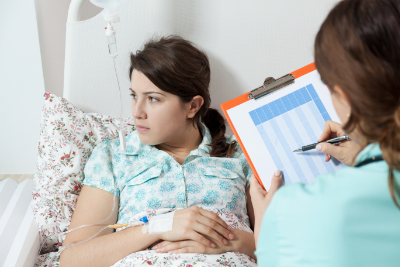
When you work in the medical field, although indicators of a victim of human trafficking may vary, there are certain things you can look out for. And, its important to keep in mind that sometimes you might not have all the information available to you, and making a referral to social services provides a way to obtain that information.
According to the National Human Trafficking Resource Center, there are general indicators you can be on the look out for when taking care of someone that you believe might be involved in human trafficking:
- Shares a scripted or inconsistent history
- Is unwilling or hesitant to answer questions about the injury or illness
- Is accompanied by an individual who does not let the patient speak for themselves, refuses to let the patient have privacy or who interprets for them
- Evidence of controlling or dominating relationships
- Demonstrates fearful or nervous behavior or avoids eye contact
- Is resistant to assistance or demonstrates hostile behavior
- In unable to provide his/her address
- Is not aware of his/her location, the current date or time
- Is not in possession of his/her identification documents
- Is not in control of his or her own money
- Is not being paid or wages are withheld
Human trafficking victims, as previously mentioned, can also have different indicators based on what type of trafficking they are being used for. For example, sex trafficking indicators will typically vary from labor trafficking indicators.
As a healthcare worker, you can make a difference by properly identifying any potential suspicions you have about someone in a bad situation, and by making sure its documented and reported so that they can receive the help they need. Human trafficking victims are most likely found in emergency departments and in womens health or family planning clinics. If you believe that someone might be a victim of human trafficking, you should first take care of their healthcare needs and then perform a complete physical to identify medical conditions that might be commonly found among trafficked persons. Its important to stay calm and ask open-ended questions, which can help build a rapport and help the individual feel more trusted.
Its also important to state reassuring messages to help gain their trust, such as saying: We are here to help you; Our priority is your safety; We will give you the medical care that you need; or even something as simple as, You can trust me.
Once you believe that you have identified someone that needs help, your place of work should have a procedure or plan specific to the needs and safety of human trafficking victims. It should include a multidisciplinary approach to contact law enforcement, social workers, nurses and hospital administration.
If a patient or anyone you come into contact with discloses that they have been trafficked, you should:
- Provide the patient with the National Human Trafficking Resource Center hotline number and encourage him/her to call it (1-888-373-7888) or the text number BeFree (233733).
- Do not provide written information if there is a chance that the trafficker will see the documents.
- If there is immediate, life-threatening danger, follow your institutional policies for reporting to law enforcement.
- Provide the patient with options for services, reporting and resources.
- Accurately document information regarding the patients injuries or treatment.
Human trafficking is a terrible, horrific situation for anyone to find themselves a part of, especially for young children or teens that are most vulnerable. Its up to you and the people around you to be alert, stay informed and look for the signs. Most importantly, trust your instincts. If something doesnt sit right in the pit of your stomach, then question or report it. You never know you could even save a life!